A Harvard Kennedy School Wrap Up Post
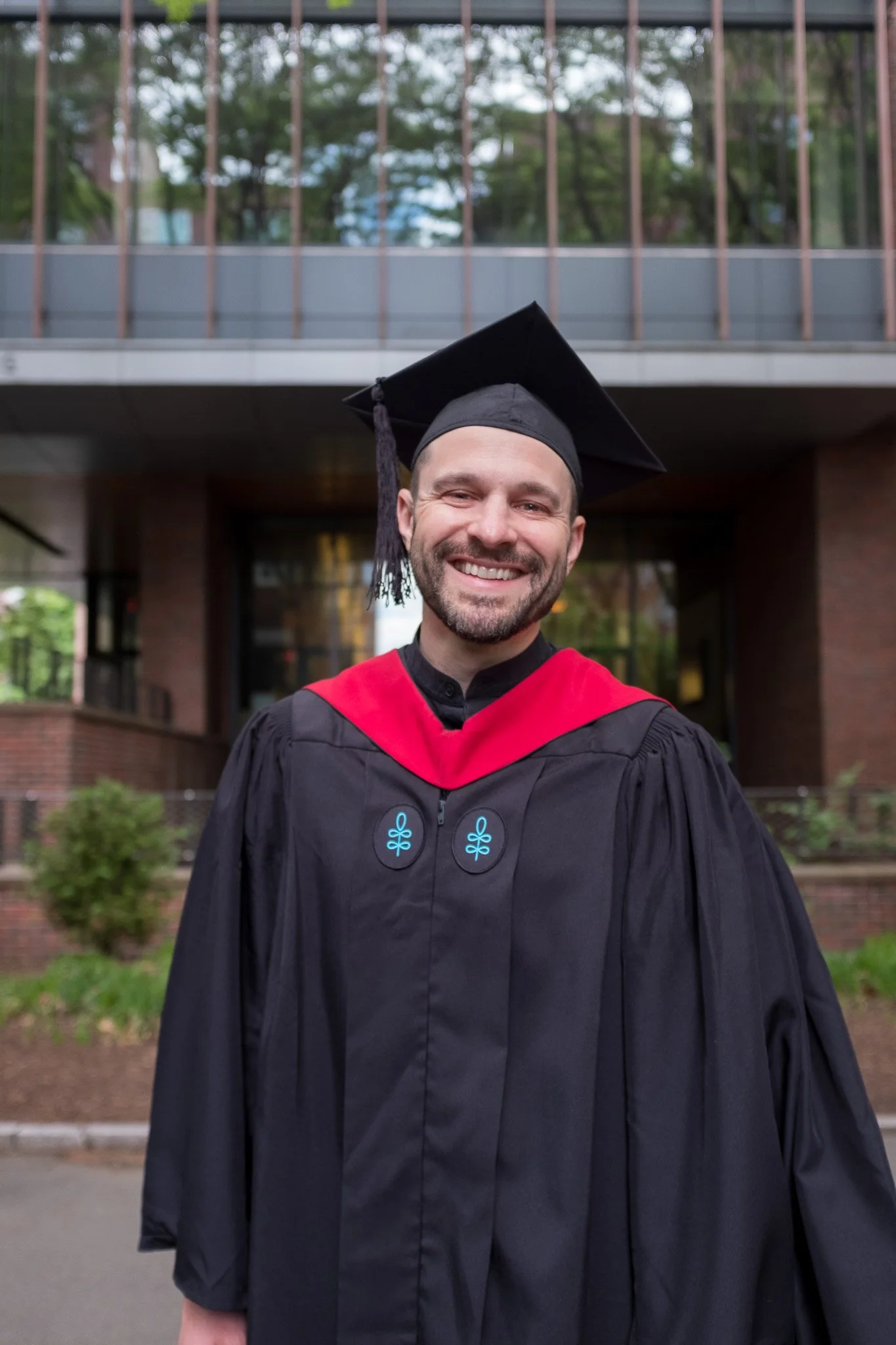
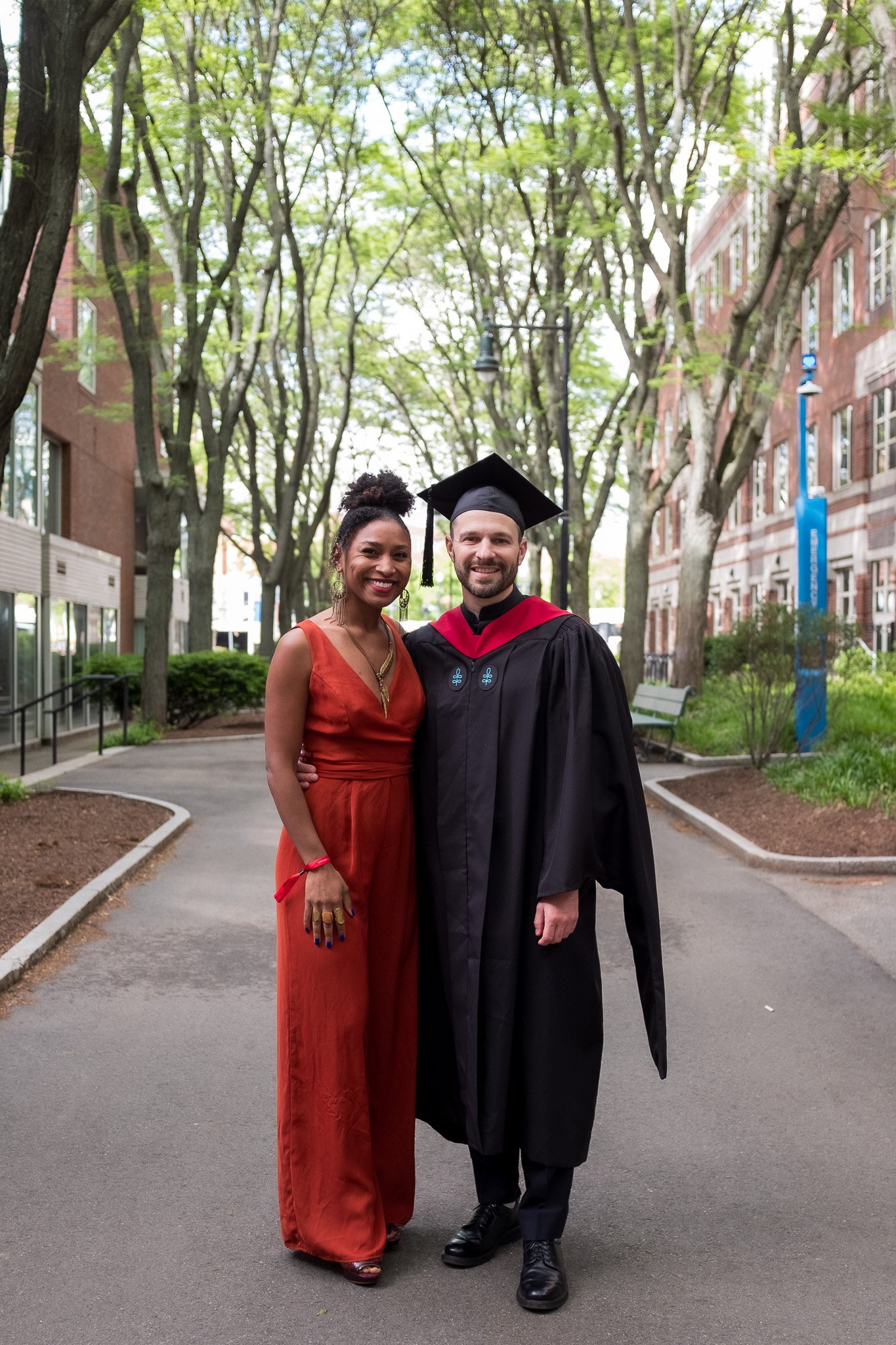
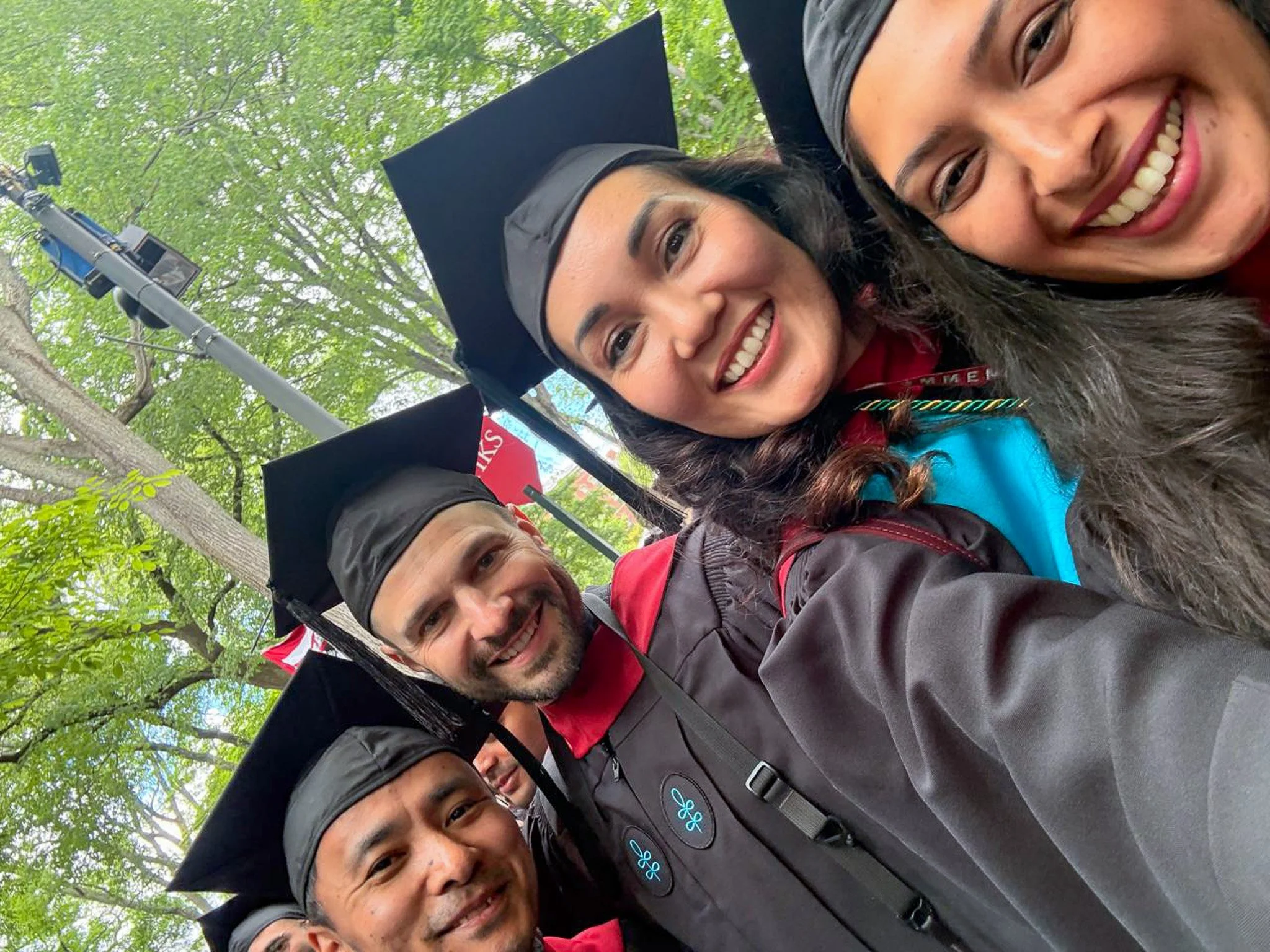
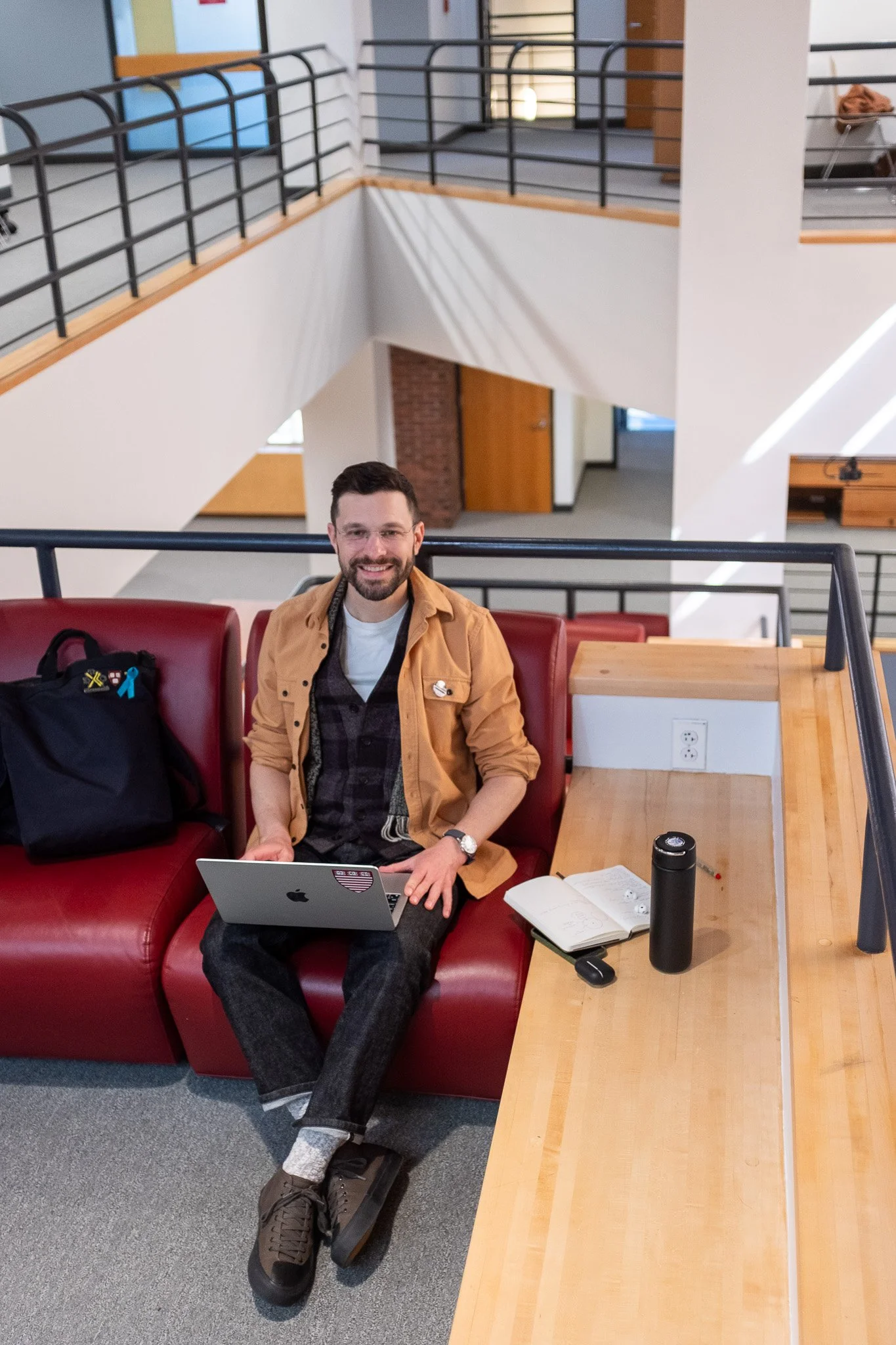
Last week I received a diploma from the Harvard Kennedy School of Government after an intense year-long master’s program. I’m so impressed with my classmates in this cohort – some 200 people from around the world – for making the hard choice to do this, and especially those who made hard journeys from far away, often made harder by the U.S. government’s intentional efforts to thwart their entry.
Here I’ll share thoughts on this educational path, a call for urgency on our technology future, and some words on inner growth and maturation.
The World Ahead
The coming years will be intense and strange times for many reasons, but I think technology will be the most disruptive of them all. At the risk of sounding too much like Kennedy School Dean Jeremy Weinstein in his commencement address, I have to agree that artificial intelligence is "the development that may end up dwarfing all others."
I came to the Kennedy School to focus on AI risk reduction, but I chose to downplay it in my application essays. I didn’t sense HKS was focused on questions of large-scale AI risk and I didn’t want to sound unhinged or paranoid. But I was still surprised when I arrived to find so few people who wanted to talk about it. I booked office hours with professors Dan Levy and Sharad Goel and both gave me relatively blank responses when I asked if HKS wanted to play a role in these issues.
But I sense that is changing. This is the year AI hit the world hard. We all touched this technology, as did billions of people around the world. Many things shook. There was huge capital mobilization and fears of financial bubbles. The nature of education changed under our feet. We saw that people can befriend and even fall in love with AI – and that people could commit murder and take their own lives as a result of these relationships. And while apprehension has come to dominate public feelings, there is no doubt that the doors of discovery are swinging on their hinges. I was so struck when a young particle physicist recently told me with amazement how experiments that typically took months, now, with natural language vibe coding, take just weeks. This may mean unveiling the atomic fabric of the universe faster than anyone could have imagined. The list of miracles will continue to grow and, I am sure, start to bear fruit and improve life in unbelievable ways.
But we’re not ready for this power, and it’s the work of a generation to figure out how to guide it safely. Work is needed to prevent AI’s weaponization by state and non-state actors, to keep our economy intact, to hold a new breed of corporations accountable, to ensure that humans don’t become irrelevant and disempowered in AI-powered societies, and that AI itself doesn’t “intentionally” or “unintentionally” deem humans expendable. Also critical I believe is the need for humans to reinforce their own roots in what it means to be human. If today’s AI’s are charismatic enough to drive people to psychosis, we are definitely not ready for human-like synthetic intelligences diffused into every aspect of life. We have a hard enough time staying human as it is.
The Kennedy School may not yet be on the cutting edge of AI governance and policy, but things may be headed in that direction. There is a 10-year plan in the works, and the Dean made it the centerpiece of his commencement address. Harvard University also conferred an honorary degree on Geoffrey Hinton, a scientist who helped build the AI field and one of the most unvarnished messengers of AI risk, a man who publicly declares double-digit probabilities of human destruction under powerful AI.
The professors are getting more clearly-spoken as well. On the last day of Public Problem Solving with Generative AI: Challenges and Opportunities Professor Weinstein’s co-teacher Sharad Goel, a computer scientist and applied mathematician who had given me a fairly blank stare a few months before, shared his own “p-doom” estimate: a 10% chance of human extinction or profound disempowerment by the end of this century if we don’t actively create a safer path.
My hope is that my classmates will help bring these ideas and hard questions to the field with them, pushing for answers. By no means do I want to deprecate other of our era’s brutal problems. I studied alongside classmates from Ukraine, Ethiopia, South Sudan, Iran, Palestine, Israel, and other war zones. We still have ecological destabilization, human rights regressions, and a clear trend toward nation-level authoritarianism. Here in the U.S. I still dedicate considerable work to issues of Black inequality and our country’s long-unfinished business of racial repair, a cause where there is progress to celebrate but also dangerous backsliding, cheered on by a president working to bring open racism back into fashion.
What I Studied (and Stumbled Into)
What will likely be an exponentially accelerating technology frontier will touch nearly all other issues in ways good and bad. I built my coursework around these issues as best I could, wrote nearly all my papers and projects on AI topics, and saw a strong learning portfolio come together.
In Jeremy and Goel’s AI course I appreciated the technical learning on the building blocks of large language models and the exposure to Python and hands-on vibe coding of AI tools for ourselves. It was also important to explore how AI is and will be deployed in healthcare, education, policy design, and government decision-making. They also assigned the AI 2027 report and, I hope, took seriously the possibility of catastrophic risks.
Karen Dynan’s macroeconomics course I found genuinely mesmerizing for the deeper understanding it gave of the major and more subtle moving parts of national economies and international trade, and I wrote my final paper forecasting effects of AI labor automation on the Black wealth gap.
David King’s Policy Entrepreneurship taught how to mobilize for change both within and outside of formal political playing fields, and I delivered projects on big tech lobbying firms and pitched an idea for an AI policy accelerator retreat.
John Haigh and Jon Sallet’s half semester module Big Tech and the Importance of Competition introduced me to the economic theory, legal tools, and policy implications of antitrust and the mechanics of regulating big corporations. For my final paper I wrote on the ways antitrust theory can be used to mitigate AI risk and keep tech firms in healthy competitive balance.
Arthur Brooks’ nonprofit management course extended my understanding of something I will surely do a lot of in the future, leading and growing nonprofits, and my final project analyzed The Center for Humane Technology, a leading AI policy org.
Lauren Brodsky’s policy memo module got me deeper into the craft of policy analysis and the art of strong policy prose, and I delivered memos on California and Massachusetts AI safety legislation.
Julie Battilana’s Power and Influence was great for refining skills in getting things done with others when you both do and don’t have formal authority.
And the Scaling up and Systems Change course taught a good blend of lean startup thinking with nonprofit and international development logistics.
After much vacillation I took the plunge on Adaptive Leadership, as taught by Hugh O’Doherty, going on a chaotic ride that finally left me feeling like a true student of adaptive change mobilization. I was able to re-evaluate leadership lessons from my years at Artiphon, and I was able to look forward toward the leadership challenges awaiting me/us in an era of disorienting change.
I audited Threats and Challenges Facing American Democracy, and while historian Alex Keysar didn’t want to talk about AI, it helped me better understand the political substrate of the US’s past and present.
First semester I dabbled in reading groups at the law school and the Harvard Human Flourishing Program (both AI focused), and second semester settled into a weekly fellowship group at the AI Student Safety Team and attended their weekend deep-dive retreat (going forward I’ll be a member there, spending time at their offices in Harvard Square).
And at the Divinity School I took a course in AI Ethics, a seminar covering philosophical, humanitarian, and religious perspectives on the dilemmas introduced by new technologies. I also audited a beautiful course called Compassion and Heart Cultivation: Buddhism and the Clinical Approach, a small group taught by Chris Berlin, the former Buddhist chaplain of the Dana Farber Center Institute.
While I have activism in my past, I largely stood on the sidelines of the several standoffs that escalated this year. Fellow students were instrumental in an ongoing effort to remove the name of Leslie Wexner, longtime connection and "main client" of Jeffrey Epstein, from the buildings and classrooms of the Kennedy School. The Crimson Courage coalition pushed the university to stand up stronger to the attack's of the Trump administration. And graduate students went on a record-setting 40-day strike to secure a stronger contract. I'm supportive of these efforts but chose to stay in my lane, for better or for worse.
Inner Development
The compassion course was a fitting bridge between the wonkiness of tech policy and another sphere that was very alive for me this year. We can call it human flourishing but I think of it these days as simply staying human. Over time I’ve only grown more interested in people’s spiritual lives, or whatever terms they use for the deeper layers of meaning they experience. This is perhaps an odd preoccupation for someone who is certainly agnostic but likely a full-fledged atheist. But I simply can’t get away from my own ever-deepening and profound love affair with being alive, and I’m fascinated with the inner lives of others.
As a longtime Buddhist meditator I enjoyed being the informal mindfulness answer man in our cohort, feeding our mindfulness WhatsApp group with articles, conferences, and meditation retreats. And we had some great field trips to local meditation centers. Thursday evenings I did my best to make it to the Full Moon Zen group that meets at the Quaker friends meeting house down Brattle Street, a small sangha led by Harvard Divinity and Law School professor Jeff Seul.
In the psychedelic domain (of course there has to be one) I met several times with a psychedelic chaplain at the Center for the Study of World Religions. And was excited to get to know fellow HKS student, CJ LoConte, a U.S. Army veteran and Truxton founder, a nonprofit helping veterans reach psychedelic healing care.
And I had some truly moving encounters at events enabled by the Harvard Presidential Initiative on Interfaith Engagement, an earnest new effort to build exchanges across the student body. Over buffet dinners I had some fascinating and vulnerable evenings with fellow students and professors with whom I would surely never have otherwise discussed spiritual life.
And then there was our week-long trip to Bhutan, led by classmate and former Bhutanese government minister Ugyen Dorji, which was a rare entrance into this remote Buddhist kingdom and its unique experiment in democracy, its pioneering of Gross National Happiness, and its plans to build an intentional high-tech city on principles of mindfulness, economic development, and balance with nature. [my photos are here]
There’s no question that much of what happens in the HKS classroom is “above the neck” in the cerebral latitudes of the person; and that while purpose, mission, ethics, and morals are vaunted topics, deep inner work isn’t much on display, though many would agree that inner depth and strength is indispensable for any act of leadership one might imagine. But that side of me definitely grew this year. The older I get, the more interested I am in what makes us not only knowledgeable and skilled, but wise. Many of the people I met were similarly emphatic about this deeper maturing, and even more people expressed an unmet hunger to connect with something deeper. For my own practices I was able to finally write down a method I’ve been using to align my inner life and purposeful work life, which you can read here, a rather detailed meditation designed to thread together existential awe with daily craft.
Falling in Love With the Problem
So here I am at another major juncture in the timeline. Here on my desk there’s a yellow sticky note affixed to my monitor that says “I am preparing myself to be of service in a landscape that is just now emerging.” Here is where I stand: I love life deeply, and that love only grows; I am committed to helping the world go well in ways as meaningful as I can; our technology can help us reach a flourishing future, but it will also challenge us in ways we are far from prepared for, and there is no guarantee of safe arrival. They say “fall in love with the problem, not the solution.” That’s where I’m starting, this “question zero.” The coming decades of my career will be devoted to this. And while AI is the thing everyone is talking about, not enough people are dedicating themselves to steering it safely. Our world needs a strong immune system of nonprofits, laboratories, university groups, watchdogs, politicians, lobbyists, think tanks, and mission driven corporations working to keep things in balance. Not to mention the artists, activists, public figures, and hometown community groups who need to speak up in the face of this tsunami. I encourage everyone to look closely, form their best assessments, and consider how they could help nudge humanity toward a safe track.
I’ll be writing a lot more about this open experiment in high-impact career building. I’ve compiled my coursework here and a profile of my professional skills here. If you want to talk, reach out and let’s talk.